MOBILE TECHNOLOGY
Mobile technology is a form of technology that is mostly used in cellular communication and other related aspects. It uses a form of platform where by many transmitters have the ability to send data at the same time on a single channel.
 Mobile code-division multiple access technology has evolved rapidly over the past few years. Since the start of this millennium, a standard mobile device has gone from being no more than a simple two-way pager to being a mobile phone, GPS navigation device, an embedded web browser and instant messaging client, and a handheld gaming console. Many experts believe that the future of computer wireless networking. Tablets are available on the 3G and 4G networks.
MOBILE PHONE GENERATIONS
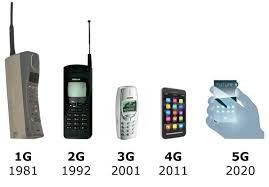
In the early 1980s, 1G was introduced as voice-only communication via "brick phones". Later in 1991, the development of 2G introduced short Message Service (SMS) and multimedia Messaging Service (MMS) capabilities, allowing picture messages to be sent and received between phones. In 1998, 3G was introduced to provide faster data-transmission speeds to support video calling and internet access. 4G was released in 2008 to support more demanding services such as gaming services, HD mobile TV, video conferencing, and 3D TV. 5G technology has been planned for the upcoming future.
OPERATING SYSTEMS
Many types of mobile operating systems (OS) are available for smartphones, including Android BlackBerry OS, webOS, iOS, Symbian, windows mobile professional (touch screen), and Bada. The popular are the apple iphone, and the newest: Android. Android, a mobile OS developed by Google, is the first completely open-source mobile OS, meaning that it is free to any cell phone mobile network.

FUTURE OF SMARTPHONES
The next generation of smartphones will be context-aware, taking advantage of the growing availability of embedded physical sensors and data exchange abilities. One of the main features applying to this is that phones will start keeping track of users personal data, and adapt to anticipate the information will need. All-new applications will come out with the new phones, one of which is an X-ray device that reveals information about any location at which the phone is pointed. companies are developing software to take advantage of more accurate location sensing data. This has been described as making the phone a virtual mouse able to click the real world.

Mobile technology is a form of technology that is mostly used in cellular communication and other related aspects. It uses a form of platform where by many transmitters have the ability to send data at the same time on a single channel.
Mobile code-division multiple access technology has evolved rapidly over the past few years. Since the start of this millennium, a standard mobile device has gone from being no more than a simple two-way pager to being a mobile phone, GPS navigation device, an embedded web browser and instant messaging client, and a handheld gaming console. Many experts believe that the future of computer wireless networking. Tablets are available on the 3G and 4G networks.MOBILE PHONE GENERATIONS
In the early 1980s, 1G was introduced as voice-only communication via "brick phones". Later in 1991, the development of 2G introduced short Message Service (SMS) and multimedia Messaging Service (MMS) capabilities, allowing picture messages to be sent and received between phones. In 1998, 3G was introduced to provide faster data-transmission speeds to support video calling and internet access. 4G was released in 2008 to support more demanding services such as gaming services, HD mobile TV, video conferencing, and 3D TV. 5G technology has been planned for the upcoming future.
OPERATING SYSTEMS
Many types of mobile operating systems (OS) are available for smartphones, including Android BlackBerry OS, webOS, iOS, Symbian, windows mobile professional (touch screen), and Bada. The popular are the apple iphone, and the newest: Android. Android, a mobile OS developed by Google, is the first completely open-source mobile OS, meaning that it is free to any cell phone mobile network.
FUTURE OF SMARTPHONES
The next generation of smartphones will be context-aware, taking advantage of the growing availability of embedded physical sensors and data exchange abilities. One of the main features applying to this is that phones will start keeping track of users personal data, and adapt to anticipate the information will need. All-new applications will come out with the new phones, one of which is an X-ray device that reveals information about any location at which the phone is pointed. companies are developing software to take advantage of more accurate location sensing data. This has been described as making the phone a virtual mouse able to click the real world.

No comments:
Post a Comment